
 Breast Surgical Oncologist
Advanced Surgical Services - By Dr. Neemesh Lodh
- Services
- Breast Cancer Surgery (Early & Advanced Stage)
- Breast Conserving Surgery (Lumpectomy)
- Oncoplastic Breast Surgery & Reconstruction
- Skin-Sparing & Nipple-Sparing Mastectomy
- Sentinel Lymph Node Biopsy & Axillary Surgery
- Mammary Ductoscopy for Nipple Discharge
- Breast Lump Evaluation & Biopsy
- Management of Benign Breast Diseases
- Gynecomastia (Male Breast) Surgery
- Chemoport Insertion for Chemotherapy
- Genetic Counseling & Risk Reduction Surgery
- High-Risk Breast Cancer Screening Programs
- Multidisciplinary Breast Cancer Care Planning
Sentinel Lymph Node Biopsy and Axillary Surgery
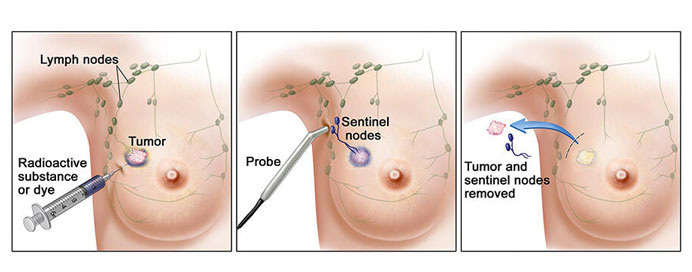
Sentinel Lymph Node Biopsy (SLNB) and axillary surgery are important procedures performed in breast cancer management to determine whether cancer has spread to the lymph nodes. The lymph nodes in the underarm (axilla) are usually the first place where breast cancer may spread. The “sentinel” lymph node is the first node that receives drainage from the tumor area. By identifying and testing this node, surgeons can accurately stage the disease while minimizing unnecessary removal of multiple lymph nodes.
Sentinel Lymph Node Biopsy (SLNB)
Sentinel Lymph Node Biopsy is a minimally invasive procedure used in early-stage breast cancer patients with no obvious lymph node involvement. During surgery, a special dye and/or radioactive tracer is injected near the tumor to identify the first draining lymph node (sentinel node). This node is then removed and examined under a microscope.
Benefits of SLNB
- Accurate staging of cancer spread
- Smaller incision and less tissue removal
- Lower risk of arm swelling (lymphedema)
- Faster recovery compared to full axillary dissection
- Reduced postoperative pain and complications
Axillary Lymph Node Dissection (ALND)
Axillary Lymph Node Dissection involves removal of multiple lymph nodes from the underarm area. It is recommended when cancer has already spread to the sentinel lymph node or when lymph nodes are clinically enlarged before surgery.
Indications for ALND
- Positive sentinel lymph node biopsy
- Advanced-stage breast cancer
- Clinically detectable lymph node involvement
- Residual nodal disease after chemotherapy
While ALND provides detailed staging and better local control in advanced cases, it carries a higher risk of side effects such as arm swelling (lymphedema), numbness, stiffness, and restricted shoulder movement.
Post-Surgical Care and Recovery
After axillary procedures, patients are advised to perform gentle arm exercises to maintain mobility and reduce stiffness. Monitoring for swelling, infection, or wound-related issues is important. Long-term follow-up is essential to detect recurrence and manage any complications early. Proper physiotherapy and lifestyle guidance significantly help in improving recovery and quality of life.