
 Breast Surgical Oncologist
Advanced Surgical Services - By Dr. Neemesh Lodh
- Services
- Breast Cancer Surgery (Early & Advanced Stage)
- Breast Conserving Surgery (Lumpectomy)
- Oncoplastic Breast Surgery & Reconstruction
- Skin-Sparing & Nipple-Sparing Mastectomy
- Sentinel Lymph Node Biopsy & Axillary Surgery
- Mammary Ductoscopy for Nipple Discharge
- Breast Lump Evaluation & Biopsy
- Management of Benign Breast Diseases
- Gynecomastia (Male Breast) Surgery
- Chemoport Insertion for Chemotherapy
- Genetic Counseling & Risk Reduction Surgery
- High-Risk Breast Cancer Screening Programs
- Multidisciplinary Breast Cancer Care Planning
Chemoport Insertion for Chemotherapy
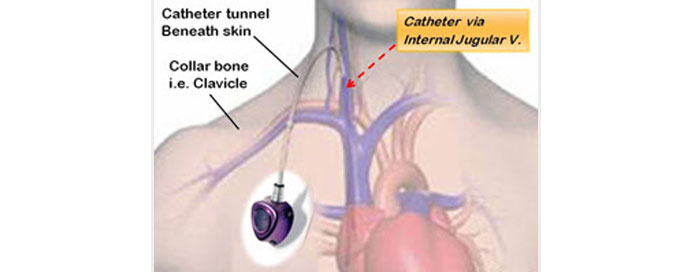
Chemoport insertion is a minor surgical procedure performed to place a small medical device under the skin, usually in the upper chest, to facilitate safe and repeated delivery of chemotherapy medications. The chemoport (also known as a port-a-cath) is connected to a catheter that goes into a large vein, allowing medications, fluids, and blood samples to be administered without repeated needle pricks in the arms. It is especially beneficial for patients undergoing long-term chemotherapy, as it provides comfort, convenience, and reduces damage to peripheral veins.
Purpose of Chemoport Insertion
Chemoport insertion is usually performed under local anesthesia with or without mild sedation. A small incision is made below the collarbone, and the port is placed beneath the skin. A catheter is then guided into a large central vein under imaging guidance to ensure accurate placement. The procedure typically takes 30–60 minutes and is done as a day-care surgery.
- Small incision made on the chest wall.
- Catheter inserted into a major vein under imaging guidance.
- Port secured under the skin and incision closed with sutures.