
 Breast Surgical Oncologist
Advanced Surgical Services - By Dr. Neemesh Lodh
- Services
- Breast Cancer Surgery (Early & Advanced Stage)
- Breast Conserving Surgery (Lumpectomy)
- Oncoplastic Breast Surgery & Reconstruction
- Skin-Sparing & Nipple-Sparing Mastectomy
- Sentinel Lymph Node Biopsy & Axillary Surgery
- Mammary Ductoscopy for Nipple Discharge
- Breast Lump Evaluation & Biopsy
- Management of Benign Breast Diseases
- Gynecomastia (Male Breast) Surgery
- Chemoport Insertion for Chemotherapy
- Genetic Counseling & Risk Reduction Surgery
- High-Risk Breast Cancer Screening Programs
- Multidisciplinary Breast Cancer Care Planning
Gynecomastia (Male Breast) Surgery
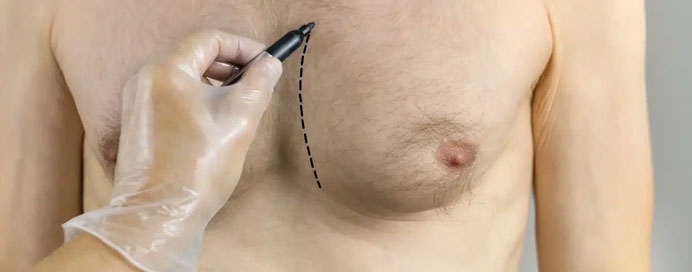
Gynecomastia surgery is a cosmetic and reconstructive procedure performed to treat enlarged male breast tissue and restore a flat, firm chest contour. The condition may develop due to hormonal imbalance, obesity, certain medications, anabolic steroid use, or genetic factors. It can affect one or both sides of the chest and often leads to embarrassment, low self-confidence, and discomfort. Surgical correction provides a permanent solution by removing excess fat and glandular tissue, resulting in a more masculine chest appearance.
Benefits of Gynecomastia Surgery
- Creates a flatter and more masculine chest contour.
- Permanently removes excess glandular and fatty tissue.
- Improves self-confidence and body image.
- Provides long-lasting and predictable aesthetic results.
- Enhances comfort in fitted clothing and physical activities.
Surgical Procedure Details
Gynecomastia surgery is usually performed under local anesthesia with sedation or general anesthesia depending on the severity of the condition. The technique used is based on whether the enlargement is due to fatty tissue, glandular tissue, or both. Advanced surgical methods ensure minimal scarring and natural-looking results.
- Liposuction is used to remove excess fatty tissue through small incisions.
- Gland excision is performed to remove firm breast gland tissue beneath the nipple.
- Skin tightening may be required in cases of significant enlargement or sagging.
Recovery and Aftercare
After the procedure, patients are advised to wear a compression garment to support healing and reduce swelling. Mild discomfort, swelling, and bruising are common but gradually improve within a few weeks. Following post-operative care instructions ensures smooth recovery and optimal results.
- Compression garments help control swelling and maintain chest contour.
- Heavy exercise and strenuous activities should be avoided for a few weeks.
- Regular follow-up visits are important to monitor healing and final results.